
 By
By
1) Story: Master P and the moment the music became property
The first time the music becomes business for most artists, it is emotional. It is a song that finally hits. A crowd that finally listens. A car window rolled down at a red light, somebody else playing your hook like it belongs to the city now. That is the seduction. You start believing the moment is the asset, because the moment is what everyone can see.
Percy Miller (a.k.a Master P) stepped into it differently, and the difference matters because it changes what you chase. Before the industry ever had a chance to narrate him as a “success story,” he was learning the business from the retail side, where the numbers either add up or they do not. In 1995, near the end of what KQED describes as a four-year run owning a small record store in Richmond, he had already relocated to the Bay Area to attend Merritt College and opened No Limit Records & Tapes on San Pablo Avenue with $10,000 he inherited from a malpractice settlement after his grandfather’s death. KQED reports he bought a store that was going out of business and negotiated six months of free rent in exchange for improving the retail space. [1]
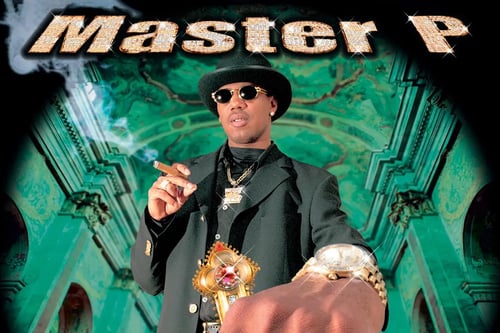
That origin story matters because it is not mythology. It is an education. A record store in the early 1990s was a live dashboard with a cash drawer attached. You learn the difference between noise and demand. You learn what “sold out” really means, which is not applause. It is replenishment, reorders, and cash tied up in inventory before you see a dime of profit. You learn how fast the money disappears the second rent, utilities, payroll, and restock get real. If you are paying attention, you learn the quiet rule that decides who wins in music long term: taste does not become money until a pipeline exists to carry it. [1]
That is the first truth the music business hides in plain sight. The pipeline is power. Trucks, distributors, retail accounts, inventory, shelf space, cash conversion cycles. None of it is glamorous, and all of it decides whether your sound becomes a career or a moment.
If you do not control the pipeline, you are dependent. If you are dependent, you negotiate like a person who needs permission. When you negotiate like a person who needs permission, you take the first deal that feels like relief, even if it mortgages your future to buy your present.
New Orleans, Louisiana (the birthplace of Master P) sits underneath this story like a pressure plate. Not as scenery, not as a brand name, but as the kind of place that teaches urgency early. When you come up where tomorrow is uncertain, you learn to think in contingency. You learn that talent is common, and that survival is not romantic. You also learn something the market rarely says out loud: people will celebrate your sound, copy your language, mimic your posture, and still treat your control over it as negotiable.
That is how extraction starts, and it usually starts as a pattern, not a villain. You create the sound. You create the slang. You create the look. Somebody else owns the contracts, the paperwork, the rights, and the channels that turn all of it into compounding wealth. You get the applause. They get the outcome. In urban music, that pattern has repeated so many times that people confuse it for fate.
The reason Master P still gets mentioned in the same breath as ownership is not because he made one clever move. It is because he trained himself to see music as property before the industry could convince him it was only performance. He learned operations the boring way, which is the only way that actually protects you. Pressing, packaging, selling, promoting, tracking what came back, tracking what got stolen, tracking what had to be reprinted, tracking cash flow. Independence in that era was not an identity. It was infrastructure you had to solve repeatedly.
Then scale arrives, the same way it always arrives. Not as a celebration, but as a wall. You can only move so much product alone. You can only reach so many stores. You can only finance so many pressings. You become responsible for other people, other careers, other families. Momentum starts feeling like debt. That is when offers show up, and the timing is never accidental. The offer arrives when you are stretched thin and most likely to confuse rescue with partnership.
The standard trade has always been simple. We will scale you, but we want control. This is where the industry collects its tax. Artists celebrate the advance like it is the win because the money is loud and the pressure at home is louder. The photo gets posted, the chain gets purchased, the story gets told as “making it.” Years later, the artist realizes the moment was not the win. The contract was the win, just not for them.
Master P treated that wall like a negotiation instead of a rescue because he understood a distinction most people do not learn until it is too late. Distribution is a service. Ownership is control. Renting infrastructure is not the same thing as selling property.
Music Business Worldwide reports that he secured a then-unheard-of distribution deal with Priority Records at 85/15 in favor of No Limit, and it places that deal in the context of him turning down a standard artist deal that would have required him to give up control. [2] This is not motivational language. It is a description of what he believed the deal was actually buying and what it was actually costing.
Here is the ownership problem in his own words:
“[Jimmy’s] offer was for a regular artist deal which meant I would be selling my rights, my name and everything I was trying to create.” [2]
That quote is not about ego. It is about the asset. It is about the fact that the thing being sold is not just labor. It is leverage. It is the right to monetize your past after the spotlight moves on.
That posture is the hinge for this entire series. He partnered for reach while protecting the asset that made reach valuable. He moved like a person who believed music was worth more after the chart than during it. He moved like a person who understood that a catalog is not nostalgia. A catalog is a long-term engine. That engine can be licensed, reissued, sampled, bundled, synced, and monetized long after the crowd goes home, but only if you still own the key that starts it.
This is what people mean, even when they say it casually, when they talk about the masters. A master recording is not just “the final song.” It is the property right in the sound recording that decides who controls the long-tail revenue and who gets to say yes when the world comes calling later. If you do not own your masters, the market can love you and still route the money around you, because the right to monetize the recording belongs to someone else.
And the ownership argument does not stay trapped in music. When he talks about products and shelf space, he is still talking about the same fight: who controls distribution, who owns the asset, and who compounds the upside.
“If we’re going to build economic empowerment, then we have to have some ownership of products in these grocery stores.” [3]
Urban music teaches you how fast a moment can fade. One season you are the voice of the summer. The next season you are a throwback. The streams do not stop. The platforms do not stop. The brands do not stop sniffing around the past, looking for something with proven emotion and proven audience. The question stays brutal and simple: who gets paid when the moment is over.
This is where Master P becomes more than a rapper in memory. He becomes a case study in how someone from an underestimated place can negotiate with power without getting swallowed by it, because he built leverage before he asked for anything. He learned the pipeline. He built the base. He protected the asset. He scaled without selling the core. That sequence is the blueprint. The names and logos change, but the sequence is the lesson.
That is why this series starts here. If you want to own your masters, you have to start thinking like an owner before the industry starts treating you like a product. That is the moment the music becomes property, and it is the moment most careers get decided without the artist realizing what just happened.
Which takes us to the thesis.
Works Cited
[1] Palmer, Tamara. “How the Bay Area and the South Became Hip-Hop Family.” KQED, March 9, 2023 (updated September 19, 2024). Accessed January 31, 2026. (KQED)
[2] Jones, Rhian. “Master P: ‘I’m looking for hit records, diamonds in the rough.’” Music Business Worldwide, February 6, 2018. Accessed January 31, 2026. (Music Business Worldwide)
[3] “A Master (P) Class in Legacy.” Bernstein, podcast page and transcript, June 14, 2022. Accessed January 31, 2026. (bernstein.com)
2) Cultural Claim: Urban music is a global value engine
For this series, “urban music” means three lineages that have repeatedly proven they can move markets at scale: hip-hop, salsa, and reggaetón. They are “urban” here for a specific reason. Each one was built inside dense city ecosystems where migration, pressure, club economies, and street-level innovation forced new sounds to form fast, spread faster, and carry identity as a portable asset. The industry often treats “urban” like a demographic label. I am treating it like a value mechanism: the place where new language, rhythm, and posture get stress-tested in public before the market knows how to price them.
Start with the rail the culture travels on. In 2024, global recorded music trade revenues reached US$29.6 billion, and the industry tracked 752 million paid subscription accounts worldwide. (1) That is not a vibe shift. That is a global distribution system where culture moves at scale, hits people in their headphones daily, and becomes behavior long before it becomes a boardroom strategy.
Hip-hop is “urban music” in the strictest sense: it is city-born culture turned global infrastructure. Britannica places hip-hop’s origins in the economically depressed South Bronx in the late 1970s, and frames it as a culture with multiple elements, not just records. (2) Spotify, looking at the modern rail, reported that in 2023 “nearly a quarter of all streams on Spotify globally are hip-hop music.” (3) When a form sits at that share of global listening on the largest streaming platform, it stops being a niche genre and starts operating like infrastructure for how people speak, dress, market, and sell.
Salsa is “urban music” because it is diaspora engineering, built in the city as a solution for memory and identity. Britannica describes salsa as a hybrid form based on Afro-Cuban music, developed largely in New York City beginning in the 1940s and 1950s, later labeled “salsa” in the 1960s. (4) Salsa’s role in the market is not nostalgia. It is durable identity export. It persists because communities keep it alive in kitchens, clubs, and family rituals first, and then the market repeatedly finds a way to repackage that memory for new audiences.
Reggaetón is “urban music” because it is modern street-to-global translation at high speed. Britannica describes reggaetón as a genre shaped by the African diaspora, blending dancehall, reggae en español, Puerto Rico’s underground scene, and U.S. hip-hop, with the dembow beat as a signature. (5) That blend is the point: it is proof that “urban” is not a single geography, but a repeatable city-and-diaspora mechanism that creates demand before institutions recognize it.
Now attach the cultural claim to measurable economics. The RIAA reported U.S. Latin recorded music revenue at $1.4 billion in 2024, up 6%, with more than 98% of that revenue attributed to streaming, and Latin music reaching 8.1% of total U.S. recorded music revenue. (6) This matters because streaming collapses borders. Once the rail is global, the argument stops being “crossover” and becomes “demand.”
If you want a single contemporary proof point that lands like a gavel, look at Bad Bunny as the system operating at full scale. Spotify’s newsroom reporting states that listeners worldwide crowned him Spotify’s Global Top Artist for the fourth time, and notes he previously held the top spot in 2020, 2021, and 2022. (7) That is repeated global selection, not a one-year spike. He is also a product of the three “urban” lineages in this framework: hip-hop’s posture and cadence, reggaetón’s rhythmic DNA, and salsa’s orchestral memory, now moving inside one catalog that reads as mainstream fluency.
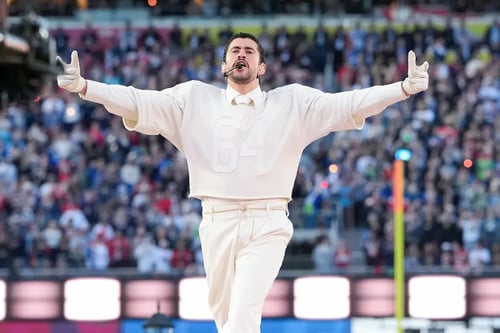
Then the market does what it always does when demand is undeniable. The NFL announced Bad Bunny would headline the Apple Music Super Bowl LX Halftime Show at Levi’s Stadium in Santa Clara on February 8, 2026, airing on NBC. (8) Apple Music framed the moment as “Road to Halftime,” building an official content runway around his catalog into the event. (9) And the Associated Press reported that Bad Bunny won Album of the Year at the 2026 Grammy Awards, the first time a Spanish-language album has taken the top honor. (10)
Inside that same run, the salsa signal is measurable, not decorative. “BAILE INoLVIDABLE” appears on Spotify’s official “Billions Club” playlist, which Spotify describes as celebrating songs with more than a billion streams. (11) Billboard also referred to “Baile Inolvidable” as a “billion-stream track” in its 2025 Pop Stars package. (12) That is what it looks like when a so-called diaspora genre stops being framed as legacy and starts behaving like platform-scale demand again.
So the claim tightens into something you can build the series on. Culture creates demand first. The business follows. Brands chase what streets already validated. Platforms monetize what neighborhoods already made meaningful. When something becomes “mainstream,” it often means the market found a way to package and distribute what the culture created without needing permission from the people who created it.
That is the power, and that is the risk. If urban music drives global demand, then whoever controls the rights controls the outcome.
Works Cited
(1) International Federation of the Phonographic Industry (IFPI). “IFPI: Amidst Highly Competitive Market, Global Recorded Music Revenues Grew 4.8% in 2024.” March 19, 2025. Accessed February 8, 2026. (IFPI)
(2) Encyclopaedia Britannica. “Hip-hop.” Accessed February 8, 2026. (Encyclopedia Britannica)
(3) Spotify Newsroom. “Nearly a Quarter of All Streams on Spotify Are Hip-Hop. Spotify’s Global Editors Reflect on the Genre’s Growth.” August 10, 2023. Accessed February 8, 2026. (Spotify)
(4) Encyclopaedia Britannica. “Salsa.” Accessed February 8, 2026. (Encyclopedia Britannica)
(5) Encyclopaedia Britannica. “Reggaeton.” Accessed February 8, 2026. (Encyclopedia Britannica)
(6) Recording Industry Association of America (RIAA). “RIAA 2024 Year-End U.S. Market Latin Music Revenue Report.” March 2025 (reporting 2024 results). Accessed February 8, 2026. (RIAA)
(7) Spotify Newsroom. “Listeners Worldwide Crown Bad Bunny Global Top Artist for Fourth Time.” December 3, 2025. Accessed February 8, 2026. (Spotify)
(8) National Football League (NFL.com). “Global sensation Bad Bunny to perform at Apple Music Super Bowl LX Halftime Show.” September 28, 2025. Accessed February 8, 2026. (NFL.com)
(9) Apple Newsroom. “Apple Music kicks off Bad Bunny’s Road to Halftime ahead of Super Bowl LX.” February 2026. Accessed February 8, 2026. (Apple)
(10) Associated Press. “Bad Bunny wins album of the year at the 2026 Grammy Awards, a first for a Spanish-language album.” February 2, 2026. Accessed February 8, 2026. (AP News)
(11) Spotify. “BILLIONS CLUB” playlist (Celebrating songs with more than a billion streams on Spotify; includes “BAILE INoLVIDABLE”). Accessed February 8, 2026. (Spotify)
(12) Billboard. “Bad Bunny: Greatest Pop Stars of 2025, No. 1” (refers to “Baile Inolvidable” as a “billion-stream track”). January 30, 2026. Accessed February 8, 2026. (ca.billboard.com)
3) Ownership Problem: visibility without control is the default trap
The ownership problem is not mysterious. It is structural. Urban music generates demand at global scale, but the default deal flow separates the creator from the assets that turn demand into compounding leverage. Visibility becomes the substitute for control because visibility is loud, and control lives in paperwork most artists are never trained to read like owners.
Here is the tell. The industry’s real money is not the moment, it is the back end. In Universal Music Group’s 2024 reporting, catalog recordings (defined there as releases older than three years) accounted for 66% of recorded music revenue, and UMG spent $288 million on catalog acquisitions in 2024. [1] (Music Business Worldwide) If the legacy side of the business was not the asset, corporations would not buy it at that scale. In the U.S., the RIAA reports streaming is 84% of recorded music revenue for 2024. [2] (RIAA) That is recurring monetization of past recordings, not just new hype. The catalog is the engine. The question is who owns the engine.
The origin of the trap is timing. Artists typically meet the industry when they are most vulnerable: bills overdue, momentum fragile, and the window feeling short. The industry meets them with speed: a meeting, a handshake, an advance, a deadline. The pitch is relief, and relief makes people sign. That is how the trade becomes normal. Masters for cash now. Publishing for access now. Approval rights traded away to “keep the relationship good.” Name and brand routed into corporate entities the artist does not control day to day. When the paperwork is done, the artist may still be the face, but the asset is owned elsewhere.
Prince made the mechanism visible because he refused to pretend it was just business. In the 1990s, he wrote “Slave” on his face and changed his name to a symbol as part of a public fight over control and release constraints. [3][4] (Los Angeles Times) He also put the lesson into a sentence that still reads like a warning label: “If you don’t own your masters, the master owns you.” [3] (Los Angeles Times) The point was never theatrics. The point was that contract control can reach into identity itself, to the point where your own name stops feeling like yours.
Kanye West exposed the same structure from a different era. In 2020, he posted pages of recording contracts and framed the fight as ownership, not marketing. Pitchfork quoted him directly: “When you sign a music deal you sign away your rights. Without the masters, you can’t do anything with your own music. … I want to see more artists own their masters.” [5] (Pitchfork) The details matter because they puncture a common myth. Fame does not automatically equal leverage. Paper still decides who controls monetization, licensing, and the long tail.
Taylor Swift’s catalog saga shows the same reality at the highest level of mainstream success. In May 2025, the Guardian reported she bought back the master recordings to her first six albums, after the catalog was sold in 2019 and later resold to Shamrock Capital, and it quoted her describing how rare it felt to regain control. [6] (The Guardian) If one of the most powerful artists in the world had to fight to own her own past, the structural point is obvious. The default system assumes the masters belong to someone else until they do not.
In Latin urban music, the ownership trap often hides inside the most personal asset: the stage name and the marks that monetize it. In October 2025, Daddy Yankee and related plaintiffs filed a federal trademark case in the District of Puerto Rico tied to “Daddy Yankee” and “DY.” [7] (Justia Dockets & Filings) Metro Puerto Rico reported that he sought a declaration of exclusive rights and injunctive relief to prevent his ex-wife from interfering with use or registration of those marks, including opposition activity at the USPTO and TTAB. [8] (Metro Puerto Rico) El Nuevo Día later reported the parties reached a “total and definitive” agreement ending that federal controversy over use of marks associated with the artist. [9] (El Nuevo Día) The real-world effect is the lesson: when your identity is monetized through trademarks and controlled through corporate governance and litigation posture, your name can become leverage against you.
The corporate layer can turn a personal split into a business choke point. People reported, citing court documents obtained by Billboard, that Daddy Yankee alleged his estranged wife withdrew $80 million without authorization from an El Cartel Records bank account, and that the dispute implicated governance, access to information, and catalog-related decisions. [10] (People.com) Even if every allegation in a fight is contested, the structural risk is not. If you do not control the companies, bank authority, and IP filings behind your brand, you can be famous and still locked out of your own machine.
And then there is the copyright reality that makes “visibility without control” brutally expensive once you are big enough to be worth suing. Hip-hop and reggaetón thrive on reference, sampling, and reinterpretation. The law does not care about cultural logic. It cares about clearance and rights. In Grand Upright Music v. Warner Bros. Records, the court opened with “Thou shalt not steal,” signaling a hard line that helped accelerate the clearance era. [11] In Bridgeport Music v. Dimension Films, the Sixth Circuit distilled it into a directive the business still lives under: “Get a license or do not sample.” [12] (Justia Law) The practical effect is simple. The more visible you become, the more your catalog becomes a target, and the more every creative choice can become a legal and financial negotiation with whoever owns what you need to reference.
This is the gap in its simplest form. The artist becomes a brand, but not an owner. The music becomes a catalog, but not theirs. The name becomes valuable, but the rights are scattered across contracts, entities, publishers, and registries. Identity turns profitable, and profit attracts control claims.
It is not that artists have no choices. It is that most choices arrive late, under pressure, and without leverage. The Master P example matters because it exposes the lie at the center of the trap: that ownership is only available to people who started inside power. The real divider is sequence. Leverage first. Paper second. Scale third.
Works Cited
[1] Music Business Worldwide. “8 Things We Learned From Universal Music Group’s 2024 Annual Report.” Published April 3, 2025. Accessed February 8, 2026. (Music Business Worldwide)
[2] Recording Industry Association of America (RIAA). “2024 Year-End Music Industry Revenue Report” (PDF). Published 2025 (reporting 2024 results). Accessed February 8, 2026. (RIAA)
[3] Los Angeles Times. “What today’s artists learned from Prince’s approach to the industry.” Published April 22, 2016. Accessed February 8, 2026. (Los Angeles Times)
[4] The Guardian. “A brief history of Prince’s contractual controversy.” Published April 22, 2015. Accessed February 8, 2026. (The Guardian)
[5] Pitchfork. “Kanye Tweets Out Alleged Record Contracts Amid Dispute With Label.” Published September 16, 2020. Accessed February 8, 2026. (Pitchfork)
[6] The Guardian. “Taylor Swift buys back the rights to the master recordings of her first six albums.” Published May 30, 2025 (last modified June 4, 2025). Accessed February 8, 2026. (The Guardian)
[7] Justia Dockets. Ayala-Rodriguez, et al v. Gonzalez-Castellanos, Case No. 3:2025cv01531 (D.P.R.). Filed October 6, 2025. Accessed February 8, 2026. (Justia Dockets & Filings)
[8] Metro Puerto Rico. “Daddy Yankee pide al Tribunal Federal proteger su derecho exclusivo a usar sus marcas ‘Daddy Yankee’ y ‘DY’.” Published October 7, 2025. Accessed February 8, 2026. (Metro Puerto Rico)
[9] El Nuevo Día. “Alcanzan ‘acuerdo total y definitivo’ en demanda federal de Daddy Yankee contra Mireddys González por uso de sus marcas.” Published October 10, 2025. Accessed February 8, 2026. (El Nuevo Día)
[10] People. “Daddy Yankee Claims Estranged Wife Withdrew $80 Million as He Files Injunction amid Split: Report.” Published December 17, 2024. Accessed February 8, 2026. (People.com)
[11] Grand Upright Music, Ltd. v. Warner Bros. Records Inc., 780 F. Supp. 182 (S.D.N.Y. 1991) (opinion text via Justia). Accessed February 8, 2026.
[12] Bridgeport Music, Inc. v. Dimension Films, 410 F.3d 792 (6th Cir. 2005) (opinion text via Justia). Accessed February 8, 2026. (Justia Law)
4) IP Lens: the plain-language mechanisms of how control gets lost
This blog is not about turning artists into lawyers. It is about making the mechanisms so plain you can see the trap before you step into it, because confusion is expensive and the industry has always profited from confusion.
Start with the simplest truth most people do not learn until after the first deal: every song usually has two separate copyrights living on top of each other. One is the musical composition, meaning the underlying music and lyrics. The other is the sound recording, meaning the recorded performance that gets released to the world. They travel together in your headphones, but the law treats them as different property. That is why an artist can “own the song” emotionally and still not own either right legally. (1)(2)
Masters are the sound recording rights. Whoever owns the master controls the core exploitation decisions for that recording: who can duplicate it, distribute it, authorize certain remixes and other derivatives, and license it into new uses. The details matter because “master ownership” is not a vibe. It is a switchboard. If you do not own the switchboard, you can be the face of the record and still need permission to monetize the record when the market comes calling later. And in the digital era, sound recordings also have a specific public performance right in the context of digital audio transmissions, which is why master ownership shows up in how certain digital performance royalties get routed. (3)(4)(5)
Publishing is the composition side, and it is where artists lose money quietly and lose leverage quietly. Publishing includes the rights tied to the underlying composition, which is why it can keep earning even when the artist is not touring, not trending, and not active. Publishing is also where paperwork failures become permanent. A rushed split sheet. A “we’ll fix it later” promise. A producer agreement that re-labels someone as a co-writer. A publishing deal that takes an exclusive slice of rights for far longer than the artist understood. In the U.S., mechanical rights for reproducing and distributing musical works have their own statutory structure, and modern streaming has pushed those systems into centralized administration through the Music Modernization Act framework and the Mechanical Licensing Collective. That is not trivia. It is a reminder that composition ownership is a real asset class with a real collection infrastructure, and whoever owns the composition is who that infrastructure pays. (1)(6)(7)(8)
Trademark is the name and identity layer, and this is where artists confuse “being known” with “being protected.” Using a stage name can create rights, but unregistered rights are typically limited by geography and proof. Federal registration is what turns a name, logo, or brand identifier into stronger commercial property with nationwide presumptions and better enforcement tools. If you ignore trademark until the name gets valuable, you often discover the worst timing rule in business: the moment you need leverage is the moment you are most likely to be blocked by someone who filed first, or by a partner who controls the entity that owns the filings. Identity is the easiest thing for the market to replicate, which is why it is one of the first things you should lock down. (9)(10)(11)
Contracts are where freedom gets decided, and “money” is often the smallest part of the deal. The real mechanism is the transfer language. Under U.S. law, an exclusive transfer of copyright ownership is not valid unless it is in writing and signed. That sounds protective until you realize what it means in practice: once the paper is signed, the transfer can be clean, enforceable, and very hard to unwind. A lot of artists think they are “doing a partnership” when the document is actually a transfer of ownership or an exclusive license that functions like ownership for a long time. Nonexclusive licenses can be granted without the same formality, which is why artists casually give away uses early, then cannot claw them back once those uses become precedent. (12)(13)(14)(15)
Work made for hire is a second trap that feels technical until you translate it into English. If something qualifies as a work made for hire, the “author” and initial owner is the employer or commissioning party, not the creator. In music-world terms, that can mean the label, the production company, or the entity behind the session becomes the legal starting point for ownership, even if the artist’s voice is the recognizable asset. You do not need to litigate the definition to feel the risk. If your contract calls something a work made for hire, you should treat that as a flashing ownership warning and get it reviewed. (16)
Then the real-world effect arrives, and it is measurable. Take noninteractive digital performance royalties as one example of how master ownership routes money: SoundExchange explains that by law, 50% goes to the sound recording rights owner, 45% is paid directly to featured artists, and 5% goes to funds for non-featured performers. That split is not a moral judgment. It is a map. If you do not own masters, you are leaving a meaningful lane of revenue to whoever does. (17)
So when I say “control gets lost,” I am not speaking in metaphors. Control gets lost when the two copyrights get split across different parties, when the name is left unregistered or routed through entities the artist cannot control, and when transfer clauses quietly convert what the artist thought was a limited permission into a durable ownership shift. If you do not define yourself, someone else will. In legal terms, if you do not structure ownership, someone else will structure it around you.
Works Cited
(1) U.S. Copyright Office. “Circular 50: Copyright Registration for Musical Compositions.” Accessed February 16, 2026. https://www.copyright.gov/circs/circ50.pdf. (U.S. Copyright Office)
(2) U.S. Copyright Office. “Circular 56A: Copyright Registration of Musical Compositions and Sound Recordings.” Accessed February 16, 2026. https://www.copyright.gov/circs/circ56a.pdf. (U.S. Copyright Office)
(3) Cornell Law School, Legal Information Institute. “17 U.S.C. § 114: Scope of exclusive rights in sound recordings.” Accessed February 16, 2026. https://www.law.cornell.edu/uscode/text/17/114. (Legal Information Institute)
(4) U.S. Copyright Office. “Circular 56: Copyright Registration of Sound Recordings.” Accessed February 16, 2026. https://www.copyright.gov/circs/circ56.pdf. (U.S. Copyright Office)
(5) Congressional Research Service. “On the Radio: Public Performance Rights in Sound Recordings.” December 8, 2025. Accessed February 16, 2026. https://www.congress.gov/crs-product/R47642. (Congress.gov)
(6) U.S. Copyright Office. “Circular 73: Compulsory License for Making and Distributing Phonorecords.” Accessed February 16, 2026. https://www.copyright.gov/circs/circ73.pdf. (U.S. Copyright Office)
(7) U.S. Copyright Office. “The Music Modernization Act.” Accessed February 16, 2026. https://www.copyright.gov/music-modernization/. (U.S. Copyright Office)
(8) The Mechanical Licensing Collective. “Royalty Payments and The MLC’s Role.” Accessed February 16, 2026. https://www.themlc.com/. (themlc.com)
(9) U.S. Patent and Trademark Office. “Trademarks Registration Toolkit” (PDF). Accessed February 16, 2026. https://www.uspto.gov/sites/default/files/documents/TM-Registration-Toolkit.pdf. (USPTO)
(10) U.S. Patent and Trademark Office. “Trademark basics: What every small business should know” (PDF). Accessed February 16, 2026. https://www.uspto.gov/sites/default/files/documents/TMbasics-small-businesses-should-know.pdf. (USPTO)
(11) U.S. Patent and Trademark Office. “Basic Facts About Trademarks” (PDF). Accessed February 16, 2026. https://www.uspto.gov/sites/default/files/BasicFacts_1.pdf. (USPTO)
(12) Cornell Law School, Legal Information Institute. “17 U.S.C. § 204: Execution of transfers of copyright ownership.” Accessed February 16, 2026. https://www.law.cornell.edu/uscode/text/17/204. (Legal Information Institute)
(13) U.S. Copyright Office. “Circular 1: Copyright Basics” (PDF). Accessed February 16, 2026. https://www.copyright.gov/circs/circ01.pdf. (U.S. Copyright Office)
(14) Cornell Law School, Legal Information Institute. “17 U.S.C. § 101: Definition of ‘transfer of copyright ownership’.” Accessed February 16, 2026. https://www.law.cornell.edu/definitions/uscode.php?def_id=17-USC-1015724446-364936160. (Legal Information Institute)
(15) U.S. Copyright Office. “Circular 12: Recordation of Transfers and Other Documents” (PDF). Accessed February 16, 2026. https://www.copyright.gov/circs/circ12.pdf. (U.S. Copyright Office)
(16) U.S. Copyright Office. “Circular 30: Works Made for Hire” (PDF). Accessed February 16, 2026. https://copyright.gov/circs/circ30.pdf. (U.S. Copyright Office)
(17) SoundExchange. “Digital Performance Royalties.” Accessed February 16, 2026. https://www.soundexchange.com/digital-performance-royalties/. (soundexchange.com)
5) The Build: how ownership should be structured
The point of this first post is not to hand you templates and pretend you are protected. The point is to give you a durable system you can carry into every room, because the rooms change, but the pattern stays the same. I use one framework because complexity is where people get manipulated, and this framework forces clarity: Name, Rights, Leverage, Legacy.
Picture the room that decides most careers. It is late. Your phone lights up. Somebody says the label is moving fast and the paperwork has to be signed tonight because the release window is “now.” They do not threaten you. They do something more effective. They make urgency feel like love. That is the moment this framework is for. Not for the artist who has time, lawyers, and breathing room. For the artist who is about to sign relief and call it destiny.
Name means treating your identity like a business asset, not a vibe. In the U.S., you can build trademark rights through use, but those rights can be limited and fact-specific. Federal registration is how you upgrade those rights into stronger commercial property with clearer enforcement tools as the business scales. [1][2] Consistency is not aesthetics. Consistency is evidence, and evidence is what wins disputes. Your minimum viable Name stack is simple: decide the stage name and branding you will actually use, use it consistently across releases and commerce, file early enough that growth does not turn into a scramble, and calendar maintenance so you do not lose a registration because you missed a deadline. The USPTO is explicit about required maintenance filings and the cancellation risk if you do not file. [3]
Rights means knowing what you own and what you are borrowing, then documenting it while relationships are still good. This is where artists lose the most by trying to be “easy to work with.” A clean owner treats rights like inventory. You track masters and publishing separately, you get splits in writing while everybody is still friendly, and you make chain of title boring on purpose because boring is how you avoid expensive surprises. The law backs this up in plain language: a transfer of copyright ownership is not valid unless it is in writing and signed. [5] That single rule explains why “we’ll fix it later” turns into “you gave it away.” Your minimum viable Rights stack is this: every session produces a split confirmation, every producer and featured artist relationship is documented in writing, master ownership and licensing terms are explicit, and your agreements live in one organized system so you can prove what you own when money shows up. If you want one concrete example of how ownership routes money, SoundExchange explains the statutory split for non-interactive digital performance royalties: 50% to the sound recording rights owner, 45% paid directly to featured artists, and 5% to a fund for non-featured performers. [6] When you do not own the master, you are choosing to route the largest share away from your control. [6]
Leverage is built, not requested. It comes from audience, distribution competence, brand clarity, and alternatives. This is where most artists get tricked, because the industry treats leverage like personality when it is really math. In the U.S., the RIAA reports streaming accounted for 84% of total recorded music revenues in 2024. [7] That means your recordings keep earning in systems that run whether you are trending or not. Leverage is your ability to walk into a negotiation with proof of demand and an option other than surrender. Master P said it plainly when describing why he turned down Jimmy Iovine’s offer: it meant he would be “selling my rights, my name and everything I was trying to create.” [8] That is leverage thinking. You are not flattered into selling the core. You rent help where you need it and keep the deed. Your minimum viable Leverage stack is this: build direct audience touchpoints, build repeatable distribution competence, keep enough cash discipline to avoid panic signing, and always maintain a real alternative so “no” is credible.
Legacy is not nostalgia. Legacy is governance. It is renewal, maintenance, enforcement, approvals, and clean successors. The catalog is where the long money lives, and that is not a motivational line. It is corporate reality. Music Business Worldwide, analyzing Universal Music Group’s 2024 annual report, noted catalog sales, defined there as recordings older than three years, accounted for 66% of UMG’s recorded music digital and physical revenue in 2024. [9][10] The law is built around long horizons too. As a general rule, for works created after January 1, 1978, copyright lasts for the life of the author plus 70 years, and for works made for hire it can run 95 years from publication or 120 years from creation, whichever is shorter. [11][12] That is longer than most careers and sometimes longer than a lifetime. Your minimum viable Legacy stack is this: maintain a calendar for trademark and corporate renewals, keep a living catalog register of what is owned and where it is administered, insist on audit rights and reporting discipline, and plan successor authority so your work does not become a fight your family has to finance.
Master P fits this framework cleanly because the sequence is disciplined. Build the base. Protect the asset. Scale without selling the core. Create an outcome that outlasts the moment. The reason this series exists is because that should be normal in urban music, and it is not. So we are going to name the traps, explain the mechanisms, and lay out the build.
Works Cited
[1] U.S. Patent and Trademark Office. “Why register your trademark?” Accessed February 16, 2026. https://www.uspto.gov/trademarks/basics/why-register-your-trademark
[2] U.S. Patent and Trademark Office. Basic Facts About Trademarks (PDF). Accessed February 16, 2026. https://www.uspto.gov/sites/default/files/BasicFacts_1.pd
[3] U.S. Patent and Trademark Office. “Maintain/Renew a Registration.” Accessed February 16, 2026. https://www.uspto.gov/trademarks/maintain
[4] U.S. Patent and Trademark Office. Trademarks Registration Toolkit (PDF). Accessed February 16, 2026. https://www.uspto.gov/sites/default/files/documents/TM-Registration-Toolkit.pdf
[5] Cornell Law School, Legal Information Institute. 17 U.S.C. § 204, “Execution of transfers of copyright ownership.” Accessed February 16, 2026. https://www.law.cornell.edu/uscode/text/17/204
[6] SoundExchange. “Digital Performance Royalties.” Accessed February 16, 2026. https://www.soundexchange.com/digital-performance-royalties/
[7] Recording Industry Association of America (RIAA). 2024 Year-End Revenue Report (PDF). Accessed February 16, 2026. https://www.riaa.com/wp-content/uploads/2025/03/RIAA-2024Year-End-Revenue-Report.pdf
[8] Music Business Worldwide. “Master P: ‘I’m looking for hit records, diamonds in the rough.’” February 6, 2018. Accessed February 16, 2026. https://www.musicbusinessworldwide.com/master-p-im-looking-for-hit-records-diamonds-in-the-rough/
[9] Music Business Worldwide. “5 million songs and $288m spent on catalogs: 8 Things We Learned From Universal Music Group’s 2024 annual report.” April 1, 2025. Accessed February 16, 2026. https://www.musicbusinessworldwide.com/5-million-songs-and-288m-spend-on-catalog-8-things-we-learned-from-universal-music-groups-2024-annual-report/
[10] Universal Music Group. Universal Music Group Annual Report 2024 (PDF). Accessed February 16, 2026. https://assets.ctfassets.net/e66ejtqbaazg/3lVdyJmpf8DQTPMRcxChSQ/80752d027f61e3846f4b5e2a5a62a958/UMG_2024_Annual_Report.pdf
[11] U.S. Copyright Office. “How long does copyright protection last?” Accessed February 16, 2026. https://www.copyright.gov/help/faq/faq-duration.html
[12] U.S. Copyright Office. Circular 15A: Duration of Copyright (PDF). Accessed February 16, 2026. https://www.copyright.gov/circs/circ15a.pdf
6) The Moment Before You Sign
The room is always the same, even when the city changes.
It is the moment the music starts moving, the moment your name starts getting said by strangers, the moment somebody offers you “help” that feels like validation and urgency at the same time. That is when most careers get decided. Not on stage. On paper. In a hurry. With someone else holding the pen.
Master P’s story matters because it exposes what the industry tries to hide behind glamour. Before the headlines, he learned the pipeline from the cash drawer. He watched inventory, demand, and shrink. He watched how fast money disappears when rent, restock, and payroll get real. That education taught him the core rule that separates moment from outcome: distribution is leverage, but ownership is control. If you confuse the two, you will wake up visible and still be renting your own life.
That is the ownership gap. Urban music can run the market and still leave the people who create it negotiating like guests in rooms they built. The market will celebrate your sound, borrow your posture, and sell the energy back as product. None of that automatically means you own what you made. “Own your masters” is not a slogan in this series. It is the boundary line between being the brand and being the beneficiary.
This is why we are doing this monthly. Each post will take one pressure point where control leaks, then translate it into plain-language mechanics you can actually use. Not legal theory. Not culture commentary without consequences. We are going to stay inside the intersection of intellectual property and urban music until the pattern is obvious, and until you can recognize the trade before it gets dressed up as opportunity.
Next month, we move from the master recording to the identity layer, because most artists lose leverage before the first royalty statement ever arrives. The post is “Identity Isn’t Vibes. It’s Infrastructure.” After that, we take the Stage Name Trap, then Publishing as the shadow owner, then the control clauses that turn “the bag” into a cage. The order matters, because sequence is the difference between building leverage and signing from hunger.
If you take one thing from this first post, take this: slow down at the moment you feel rushed. That feeling is not random. It is the system doing what it does. Your job is to treat the next room like a negotiation, not a rescue, and to start thinking like an owner before anyone else decides you are a product.
-Pablo Segarra, Esq.